

**Not accepting new clients
Hi, I’m Constance.
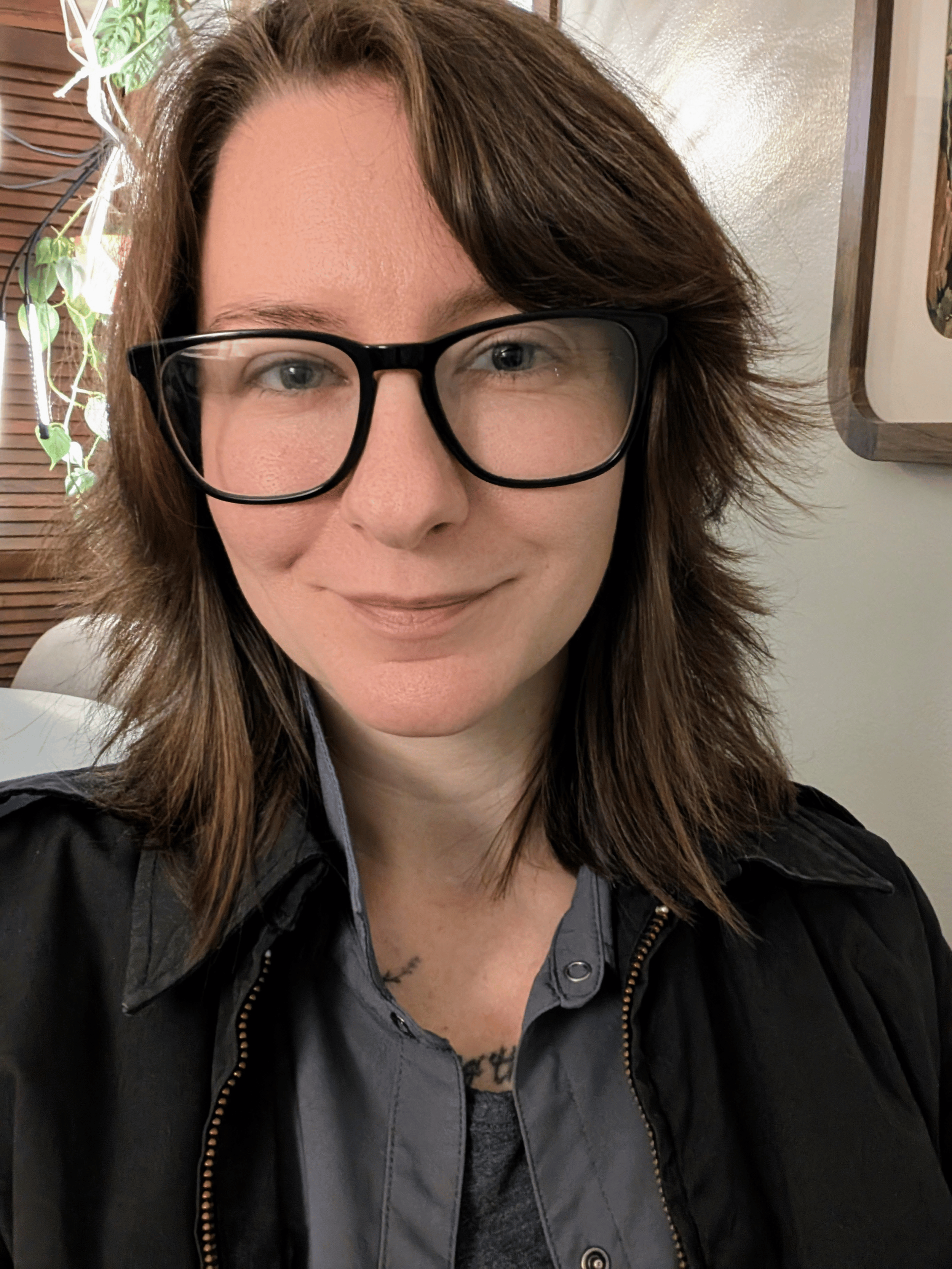
I provide a collaborative space for navigating complex inner worlds—where all of you is welcome.
My Approach
Trauma-competent
I am a trauma and dissociation specialist bridging lived experience with clinical expertise and plural-specific interventions.
Collaborative
You are the expert on you. I am a lifelong learner and have many knowledge bases to pull from, but we are copilots on this journey.
Intuitive
Our sessions might not look the same from week to week because chances are something has shifted, changed, or returned since the last time we met. I allow our collective intuition to guide rather than scripts and protocols.

Reasons you might be here
-

You're good at getting sh*t done but not taking care of yourself.
Being productive gives you a sense of purpose, and people appreciate how much you carry. But lately, staying busy isn't working the way it used to and it’s hard to say no. Maybe it’s familial, cultural, or societal expectations that make your autopilot hard to turn off. And no matter how difficult things become, you might even stay in unsupportive situations longer than you want to.
-

It's hard to talk about it.
Maybe you’ve had experiences that are difficult to talk about because they make the room go quiet. Everyone else is sharing memories from childhood, laughing, maybe commiserating. When it’s your turn, the room shifts. People look at you—some with shock, some with sympathy you didn’t ask for, and sometimes with disgust. They try to hide their reaction, but it’s a second too late and you notice. You always notice.
-

Attachment is complicated.
Trust is difficult, but you long for genuine connection. They say they love you, but it doesn’t quite reach you the way you wish it would. When they reach out for a hug, you might feel a tension you don’t fully understand. When they ask for space, you’re surprised by the discomfort that shows up. Maybe you don’t like being alone, but you don’t always want to be touched. Regardless, connection doesn’t feel easy despite wanting it to.
-

The response is disproportionate to the threat.
A glass gets dropped and breaks, but your body reacts like you need escape now. Your toe gets stepped on, and something inside wants to snap. It’s your friend having a bad day, but you shut down and watch from a distance. Someone knocks on the door and, for a moment, you feel like prey. Plans get cancelled, and suddenly you’re wondering if they’re upset with you.
-

Memory is complicated.
You struggle to remember what you did last week or even this morning. You might struggle to recall if you just completed a task or just thought about it. You try to provide a linear narrative of your life, but the details like what year it was or how old you were get confused. Maybe you’re missing large gaps of time. Perhaps you sense something bad happened to you like it’s on the tip of your tongue or hidden just out of sight.
-

You don't fit into boxes.
Maybe you’ve questioned your identity, exploring gender or sexuality and came out finding more than one identity feels true. Or maybe you’ve sought help in the past, but the “expert” couldn’t find anything that explains your complex experience. Maybe you’ve been given a few diagnoses or medications over time, but nothing seems to help consistently. You seem to fit too many boxes or none at all.
-

Inner conflict rules.
Everything's fine and also somehow not fine. Your preferences and mood seem to shift unpredictably. One moment you’re grateful, the next you’re dissatisfied. One moment you feel small like a child and the next you feel rebellious like a teenager. Distressing thoughts about not being here anymore might even catch you off guard. You might also struggle with brain fog or a noisy mind that keeps you distracted or confused.
-

You want to grow your support network.
Finding community can be hard when it doesn’t always feel safe to be yourself. You can be different depending on where you are, who you’re with, or what state you’re in. Your interests and skills may vary widely. You want connection, but don’t always experience yourself the same way and this is hard for others to understand. You might not know which version of you others expect, or if there’s room for all of you.
I specialize in presentations that may fit labels such as Plural, Polyfragmented, OSDD, DID, or cPTSD. I may also be a good match for those with complex trauma histories who are or love someone who is queer, Trans/GNC, or ADHD/AuDHD/ASD, those who have abolitionist or decolonial values, or those who are simply ready to delve deeper into the messiness of their interiority to resolve long held survival patterns.
How I can help
EMDR
A highly researched and evidence-based practice for complex trauma and other things that get “stuck”
Expressive Arts
Painting, drawing, writing, collage, or a dash of theater keep us moving when words are hard to find
IFS +
IFS-informed EMDR and parts work therapies move us closer to compassion and away from stigma
Education
Whether it’s about modalities, resources, or neuroscience, “psychoed” is a regular part of the process
Somatic +
EMDR, IFS, Sensorimotor, and mindful movement are tools to bring you home to your body at your own pace
Relational
Tapping into the here and now of the therapeutic relationship can be a remarkable tool in understanding the patterns that occur within your other relationships
FAQ
-
Good question!
What you pay depends on your insurance plan or if you are paying out-of-pocket.
With insurance, you may have a co-pay, co-insurance, or a deductible. It’s your responsibility to know and you can find this information by contacting your insurance payer.
With insurance, you won’t pay my rates, you’ll pay what your plan allows and no more than a contracted reimbursement rate (i.e., the rate the insurance company agreed to pay me when I credentialed with them) and insurance companies contractually bar providers from sharing those reimbursement rates publicly, (yes, you read that right) so I can’t actually state here what that might be.
My private pay rates are:
$175 for our initial appointment
$150 for 60-75 minutes
$0 for a 15-minute phone consult
*I offer limited sliding scale options using the Green Bottle Sliding Scale to determine eligibility.
Regardless of your financial situation, let’s talk about it!
-
Another good question!
It depends :-)
Some folks find that for emergent life stressors and changes, having a therapist on their team for a few months helps them regain insight and stability. Others find that a longer-term approach with a consistent helper supports deeper work repairing years spent in survival.
It’s also expected and encouraged for you to let your therapist know if you feel like you’re moving in the right direction. This is a collaboration where we’ll check in regularly to ensure we’re on the right track.
(Having met your goals and seeing the changes you wanted to implement are pretty good indicators!)
-
It’s a process and you are at step one right now.
Step one - do you connect with my website? do I offer what you’re looking for? do you sense I’ve worked with similar issues to your own? do you connect with my philosophy?
If you said yes to any of those, proceed -
Step two - have a phone consult. do you feel hopeful or validated afterwards? were you given the opportunity to ask questions?
Step three - have your first appointment. did you feel like I was curious about you? did you find me reasonably easy to talk to for a first meeting?
Step four - after another session or two, do you feel like I am really listening? how do you feel when you’re working with me? can you see yourself growing toward the life you want with me as a collaborator?
If yes to all or most of these, that’s a pretty good indicator!
(These are just some of the considerations you might make.)
Ready?
***I am unable to accept new clients at this time.
Use the contact form to share a little about yourself before we schedule a free 15-minute phone consultation.
A consult gives us both a chance to ask questions and for me to provide everything you need to know to get started.